


Service area El Paso County
Colorado Springs home remodeling, from the Old North End to Banning Lewis Ranch
Colorado Springs has houses from every decade since the 1880s, on mesas, foothills and plains. Your part of town shapes a remodel as much as the room does.
Colorado Springs within the Front Range service area
Illustration
Overview
Remodeling Colorado Springs homes
Remodeling For Less plans Colorado Springs home remodeling across the city, from historic houses north of Colorado College to subdivisions still filling in on the east side. The work covers kitchen remodeling, bathroom remodeling, basement finishing, open floor plans and whole-home refreshes, scoped to your actual house.
Permits come from the Pikes Peak Regional Building Department, set up in 1966 by El Paso County and the city. Some neighborhoods add historic review, and parts of the west side bring slope and wildfire questions into the plan.
Areas and neighborhoods in Colorado Springs
- Old North End
- Old Colorado City
- Knob Hill
- Pleasant Valley
- Broadmoor
- Briargate
- Mountain Shadows
- Banning Lewis Ranch
The housing
A city built in waves, and what each wave needs now
Old Colorado City was founded in 1859 and Colorado Springs in 1871, as a resort town. The city grew by annexation, taking in Old Colorado City in 1917 and expanding steadily after 1946.
The Old North End and the Westside
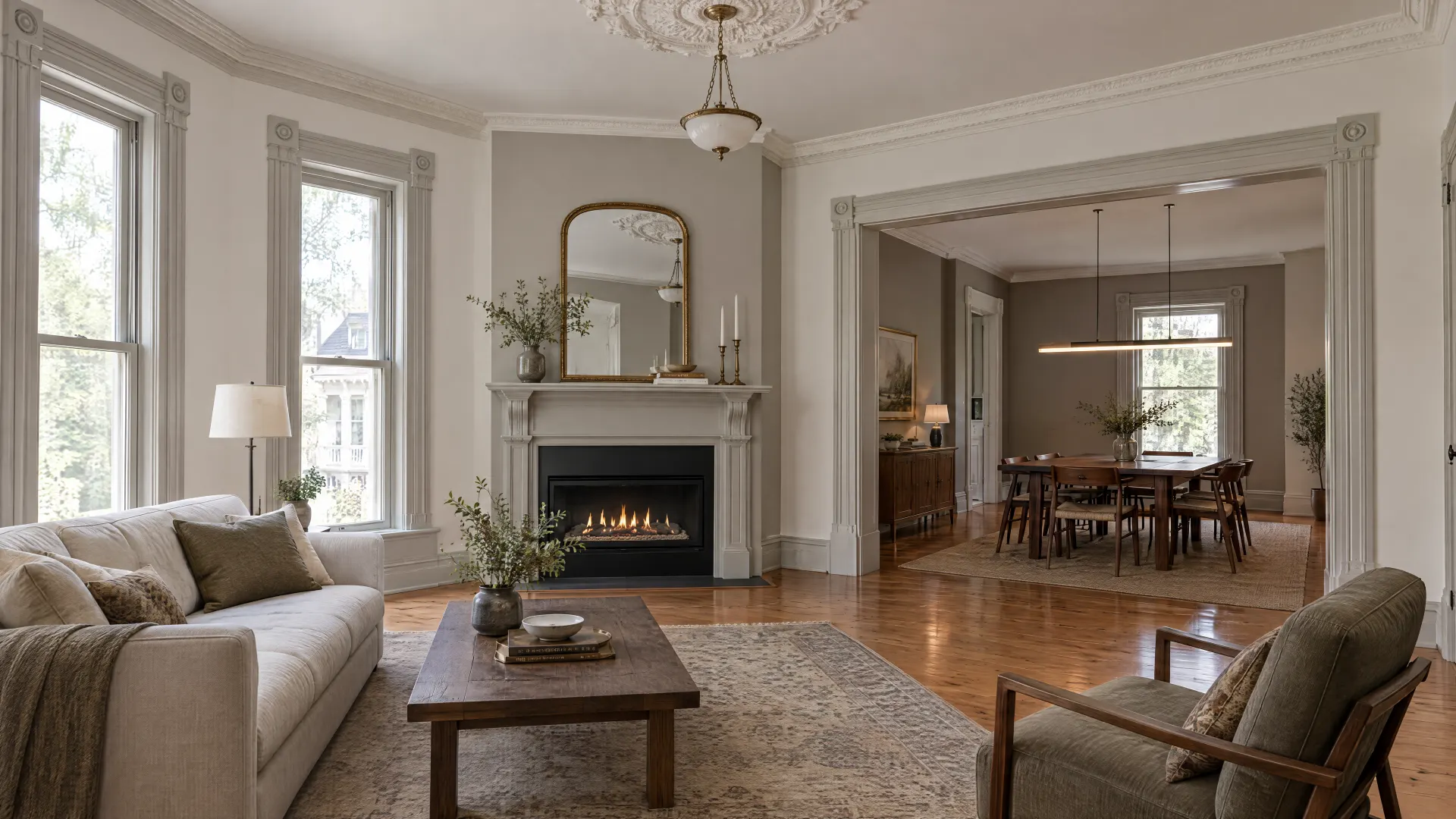
North of Colorado College, many Old North End houses went up between 1890 and 1910 on Cripple Creek gold money, in Tudor, Colonial Revival, Queen Anne and other styles, some with sleeping porches for people recovering from tuberculosis. The nearby Weber-Wahsatch district was also largely built during the late-19th-century mining boom. Many big houses were cut into apartments during the Depression and World War II, so remodeling one often means undoing a conversion and replacing old wiring and plumbing.
Postwar neighborhoods and military growth
After the war the city annexed its way outward: Pleasant Valley in 1950, Knob Hill in 1952, Austin Bluffs from 1958 to 1965 and Woodmen Valley in 1969. Camp Carson became Fort Carson in 1954, the year the Air Force Academy was established. These houses are now roughly 50 to 80 years old. Kitchens are often small and walled in, so opening a wall or reconfiguring the kitchen changes the most, and check the electrical service before adding circuits.
Broadmoor, Skyway and the north side
In the early 1980s the city annexed five suburbs at once, including Broadmoor, Skyway and Ivywild. Broadmoor, developed from the 1890s, climbs onto the northern spur of Cheyenne Mountain, and Briargate was annexed in 1982. Houses from this stretch are usually sound in structure but often due for kitchens, baths, windows and a finished lower level. On sloped lots in the southwest, check grading and drainage before planning an addition or a walkout.
Banning Lewis Ranch and the east side
The city limits took in Banning Lewis Ranch in 1988, but only about 300 homes went up there before the owners filed for bankruptcy in 2010. Building took off after 2015, and the area now has six villages. These are the newest houses in Colorado Springs, so remodels tend toward finishing a basement, upgrading builder finishes or adding what the floor plan lacks, like a home office, a mudroom or a larger primary shower.
Local factors
What shapes a remodel in Colorado Springs
Regional Building permits and licensed contractors
Regional Building requires permits for basement finishes, electrical work, new or modified framing, fireplaces, furnaces, water heaters, siding and roofing, among others. Cosmetic work like paint, flooring and new kitchen cabinets generally doesn't. A hired contractor must be licensed and registered with Regional Building, and a homeowner can't legally pull a permit for someone else's work. Unpermitted work can bring a stop work order and a Certificate of Alleged Non-compliance recorded against the property.
Historic review in the Old North End
The Old North End has been on the National Register since 1982, which by itself puts no restrictions on renovations. Local Historic Preservation Overlay zoning is what adds design review. Inside the overlay, the City's Historic Preservation Board reviews modifications to existing structures against the Old North End design standards, and its approval is called a Report of Acceptability. National Register listing can also open the door to state tax credits for certain improvements.
West-side slopes and wildfire
The Colorado Geological Survey has mapped landslide susceptibility across Colorado Springs and documented the Constellation Drive landslide in 2015, so hillside lots deserve a drainage and grading check before an addition or walkout. Wildfire is the other west-side lesson. The 2012 Waldo Canyon Fire destroyed 346 homes in western Colorado Springs, spreading house to house through Mountain Shadows. When a remodel touches siding, decks, vents or roofing, use ignition-resistant materials and seal the gaps embers find.
If this, then that
Where a Colorado Springs project usually begins
| If | Then |
|---|---|
| If your Old North End house is in the overlay and the outside will change | Then talk with the City's historic preservation staff first, since Board approval can be needed before Regional Building issues the permit. |
| If your postwar house has a small, closed kitchen | Then open it to the living room as a reconfiguration, once an engineer confirms whether the wall carries load. |
| If your newer house has an unfinished basement | Then basement finishing with a Regional Building permit, bedroom egress and a moisture check first. |
Services in Colorado Springs
How the five services fit Colorado Springs houses
The same service means different work in an 1890s house than a 2010s one.
Kitchen remodeling
A kitchen remodel in an Old North End house often starts with a room that was never meant for modern appliances, or one carved up during an apartment conversion. Expect to update wiring and plumbing once walls are open. In postwar houses the kitchen is often small, and the payoff comes from borrowing space from a dining room or opening a wall.
Basement finishing
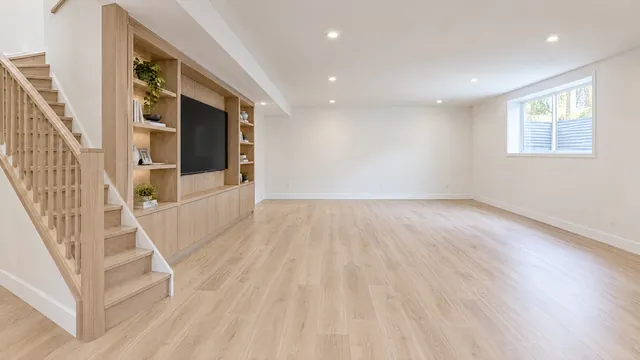
Regional Building lists basement finishing among the projects that need a permit anywhere it serves, from the city to unincorporated El Paso County. Plan an emergency escape window for any bedroom, check the slab and foundation walls for moisture before framing, and detail non-bearing walls so they won't be damaged if the slab moves. Radon mitigation is easiest to add before drywall.
Open floor plans
Opening walls in an older Colorado Springs house usually changes it more than any finish choice. Any load-bearing wall needs an engineered beam and a Regional Building permit for the framing change. In an overlay-zoned Old North End house, the design standards focus on the exterior, so check with the City's historic preservation staff if windows, doors or other exterior openings change along with it.
Planning checklist
Before you remodel in Colorado Springs
Tick them off as you go. Your list stays saved in this browser only.
Questions
Remodeling questions from Colorado Springs homeowners
-
The Pikes Peak Regional Building Department. It handles plan review, permits and inspections for Colorado Springs, unincorporated El Paso County, Fountain, Manitou Springs, Monument, Palmer Lake, Green Mountain Falls, Calhan and Woodland Park. It also licenses contractors, so you can confirm that anyone you hire is licensed and registered before work starts.
-
Generally, no, you don't. Regional Building treats replacing kitchen cabinets and most appliances, painting and new flooring as cosmetic work. Once the project moves plumbing, adds circuits, changes framing or touches gas lines, it needs a permit. Regional Building's online Start a Project tool walks through whether your particular project does.
-
Possibly, but confirm it first. The neighborhood association's restoration guidance says window replacement doesn't require a permit unless an opening is enlarged, reduced or added. The City's Historic Preservation Board still reviews modifications to existing structures in the overlay, so ask the City's historic preservation staff before ordering, especially if any opening changes.
-
Regional Building can issue a stop work order and file a Certificate of Alleged Non-compliance against the property, which acts as a lien. It can also surface in a pre-sale home inspection, and the current owner is responsible for the permits and inspections to fix it. A remodel is the time to fix it.
-
Only for work you do yourself on your primary residence, which you own and live in. Regional Building won't issue homeowner permits for rentals or homes you don't live in, and it's illegal for a homeowner to pull a permit for a hired contractor. If you hire someone, they pull the permit.
No questions match that search. Try a shorter word.
The bottom line
The bottom line
Colorado Springs spans more than a century of houses, and each era starts somewhere different: conversions to undo in the Old North End, closed kitchens in postwar neighborhoods, raw basements in newer builds. Confirm your contractor with Regional Building, check for an overlay or a hillside before exterior work, and call 720-729-9677 to talk through your Colorado Springs project.
Talk through your Colorado Springs project
Start with the room and what isn't working. The scope follows from there.
Illustration